Synthetic vs. Conventional vs. Blend vs. High-Mileage: Which Oil Does Your Rig Actually Need?
 Mark Ossinger
Independent AMSOIL Dealer · Sisters, Oregon
The short answer: Full synthetic oil gives the best protection and the longest life between changes. It's the right choice for modern, turbocharged and direct-injected engines, towing, and extreme heat or cold. Conventional oil still works in older, light-duty vehicles. A synthetic-blend is a middle step, but there's no standard for how much synthetic it has to contain. High-mileage oil is made for engines past about 75,000 miles, with seal conditioners to help prevent leaks. Whatever you pick, use the viscosity and specification in your owner's manual.
Stand in front of the motor oil shelf for thirty seconds and you'll see the problem: synthetic, conventional, synthetic-blend, high-mileage. It's a wall of jugs, all claiming to be the right choice. Here's what each one actually is, in plain terms, so you can pick with confidence.
Motor oil types compared
| Oil type | What it is | Best for | Watch out for |
|---|---|---|---|
| Full synthetic | Base oils engineered for pure, uniform molecules | Modern engines, turbos, towing, extreme temperatures, longer drain intervals | Higher price per jug |
| Conventional | Base oils refined from crude oil | Older, low-stress vehicles on a tight budget | Shorter life, more deposits, weaker in extreme cold and heat |
| Synthetic-blend | A mix of synthetic and conventional base oils | A step up from conventional at a lower price than full synthetic | No standard for how much synthetic is in the jug |
| High-mileage | Usually a blend, sometimes full synthetic, with seal conditioners and extra additives | Engines with roughly 75,000+ miles, or a new drip that wasn't there before | Check whether it's a blend or a full synthetic |
What is full synthetic oil?
Full synthetic oil is the best protection you can buy. Conventional base oil is simply refined from crude. Synthetic base oils are engineered at the molecular level, so you get a pure, uniform base oil without the waxes, sulfur and unstable molecules that come along with crude oil. AMSOIL describes synthetics as free of the impurities and molecular irregularities inherent to conventional oils.
That matters because those impurities are what make oil thicken in the cold, burn off in extreme heat and leave deposits behind. A good synthetic resists all three. It flows when it's freezing, holds up when it's scorching, keeps engines cleaner, and runs longer between changes. It costs more up front, but it's the best long-term value. That's especially true in modern turbocharged and direct-injected engines, which run hotter and ask more of their oil than ever before.
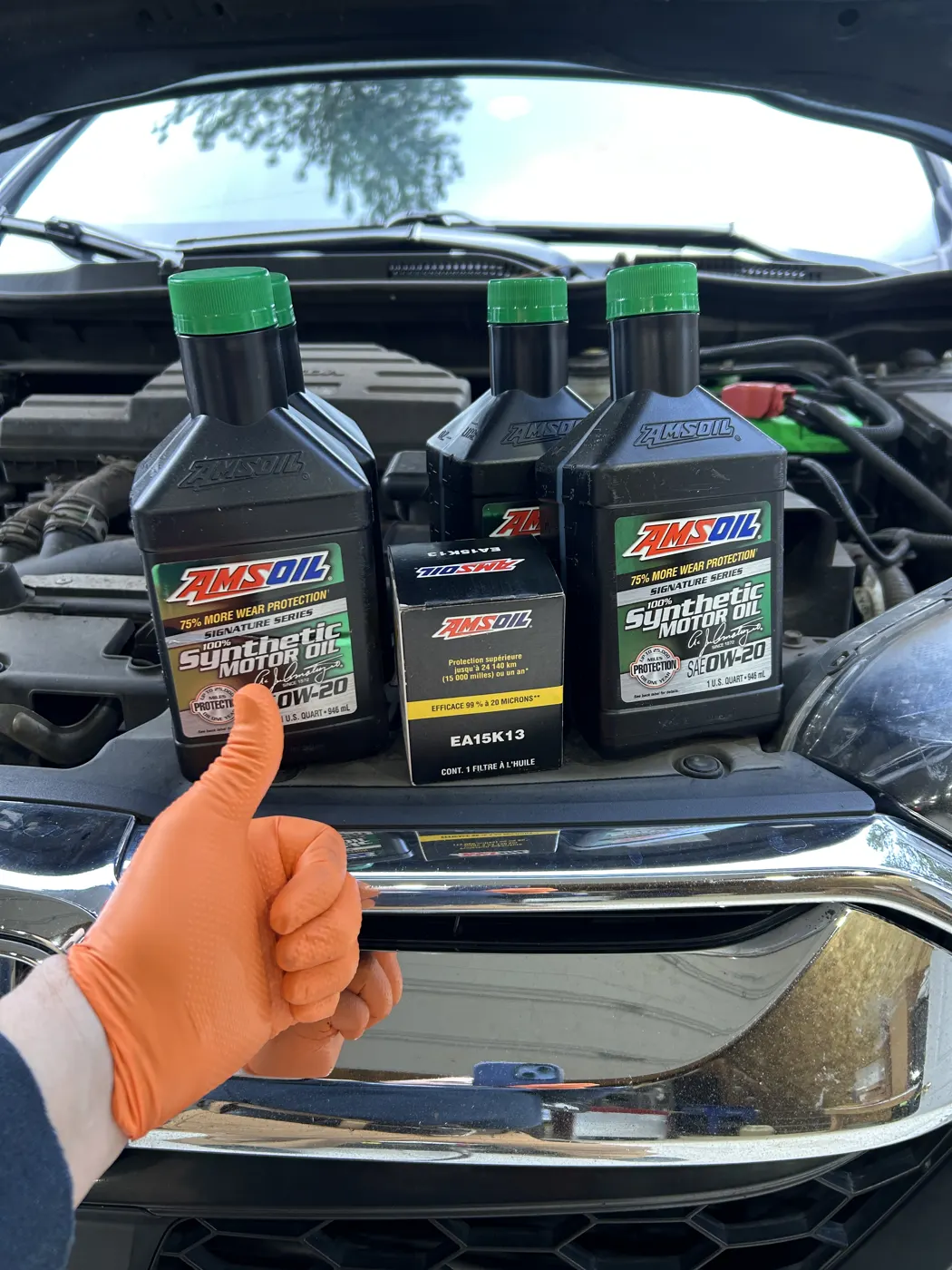
Here in Central Oregon, that covers a lot of us: single-digit mornings in Sisters and La Pine, summer heat on the high desert, and trailers pulled over Santiam Pass. If you drive a newer truck, tow heavy, or just want the best protection available, this is your oil. On the AMSOIL side, that's Signature Series 100% Synthetic Motor Oil and the rest of the 100% synthetic lineup.
Is conventional oil still OK?
Conventional oil is refined from crude oil, and it's been getting the job done for decades. It's the lowest price on the shelf, and for an older, low-stress vehicle it still works.
There's no getting around its limits, though: shorter service life, more deposits over time, and it struggles in extreme cold and heat compared to synthetic. Many modern engines call for synthetic oil, often in low-viscosity grades like 0W-20. If your owner's manual specifies one, conventional isn't really an option.
What is synthetic-blend oil?
A synthetic-blend (also called semi-synthetic) mixes synthetic and conventional base oils. You get better protection than conventional at a lower price than full synthetic. Plenty of drivers land here, and it's a legitimate step up.
Here's the catch most people don't know: according to AMSOIL, there are no industry specifications or regulations that set a minimum amount of synthetic base oil for an oil to be called a synthetic-blend. It could be a meaningful amount or a token splash, and the label doesn't have to say. So quality varies widely from jug to jug. If you go the blend route, buy from a brand you trust, such as AMSOIL Synthetic-Blend Motor Oil.
When should you use high-mileage oil?
High-mileage oil is the fastest-growing oil type, according to AMSOIL's synthetic vs. conventional guide, and most are synthetic-blends with extra additives. They're formulated for engines with roughly 75,000 or more miles. Seal conditioners help aging seals stay pliable and prevent leaks, and viscosities on the upper end of the range cushion the wider clearances that develop as parts wear.
If your truck's got six figures on the odometer and you're noticing a drip where there wasn't one, this is worth a look. Full-synthetic high-mileage options exist too, for those who want the additives without giving up synthetic protection. AMSOIL's version is 100% Synthetic High-Mileage Motor Oil, which AMSOIL says is made for vehicles with over 75,000 miles.
The bottom line: which oil should you choose?
Match the oil to the machine and how you use it.
- Full synthetic: daily-driven modern truck, turbo, towing, extreme temperatures, or you just want maximum engine life.
- Conventional: older vehicle, light duty, tight budget.
- Synthetic-blend or high-mileage: somewhere in between, or an older engine starting to seep.
And don't just look at the price on the jug. Look at the cost per mile. An oil that protects better and runs longer between changes is usually the cheaper choice over the life of the vehicle, not to mention what it saves in wear.
Not sure which one fits your rig? That's what I'm here for. Look up your vehicle in the AMSOIL Product Guide, or get in touch or call 541-316-9643, and I'll point you at the right product. If you use AMSOIL regularly, ask me about the Preferred Customer program; wholesale pricing is available only through registration as a Preferred Customer. Heading into winter? See my Central Oregon winter prep checklist too.
— Mark Ossinger, High Desert Synthetics
Frequently asked questions
Is synthetic oil better than conventional oil?
For most vehicles, yes. Synthetic base oils are purer and more uniform than conventional oil, so synthetic oil flows better in the cold, resists breaking down in heat, keeps engines cleaner and lasts longer between changes. Conventional oil still works in older, low-stress vehicles.
Can I mix synthetic and conventional oil?
Yes, it's safe to mix them. A synthetic-blend is simply the two mixed in the bottle. Mixing does reduce the benefits of the synthetic oil, though, so it's best only when you need to top off and have no other choice.
How much synthetic oil is in a synthetic-blend?
There's no way to know from the label. No industry specification or regulation sets a minimum amount of synthetic base oil for an oil to be called a synthetic-blend, so quality varies from brand to brand.
When should I switch to high-mileage oil?
High-mileage oils are made for engines with roughly 75,000 miles or more. They're worth considering if your engine has started to seep or leak oil, because they contain seal conditioners to help keep aging seals pliable.
Can I use synthetic oil in an older engine?
Yes. Synthetic oil is safe for older engines. Always use the viscosity grade and specification listed in your owner's manual.
Posted by Mark Ossinger, Independent AMSOIL Dealer, High Desert Synthetics, Sisters, Oregon. Product claims are those of AMSOIL INC.